
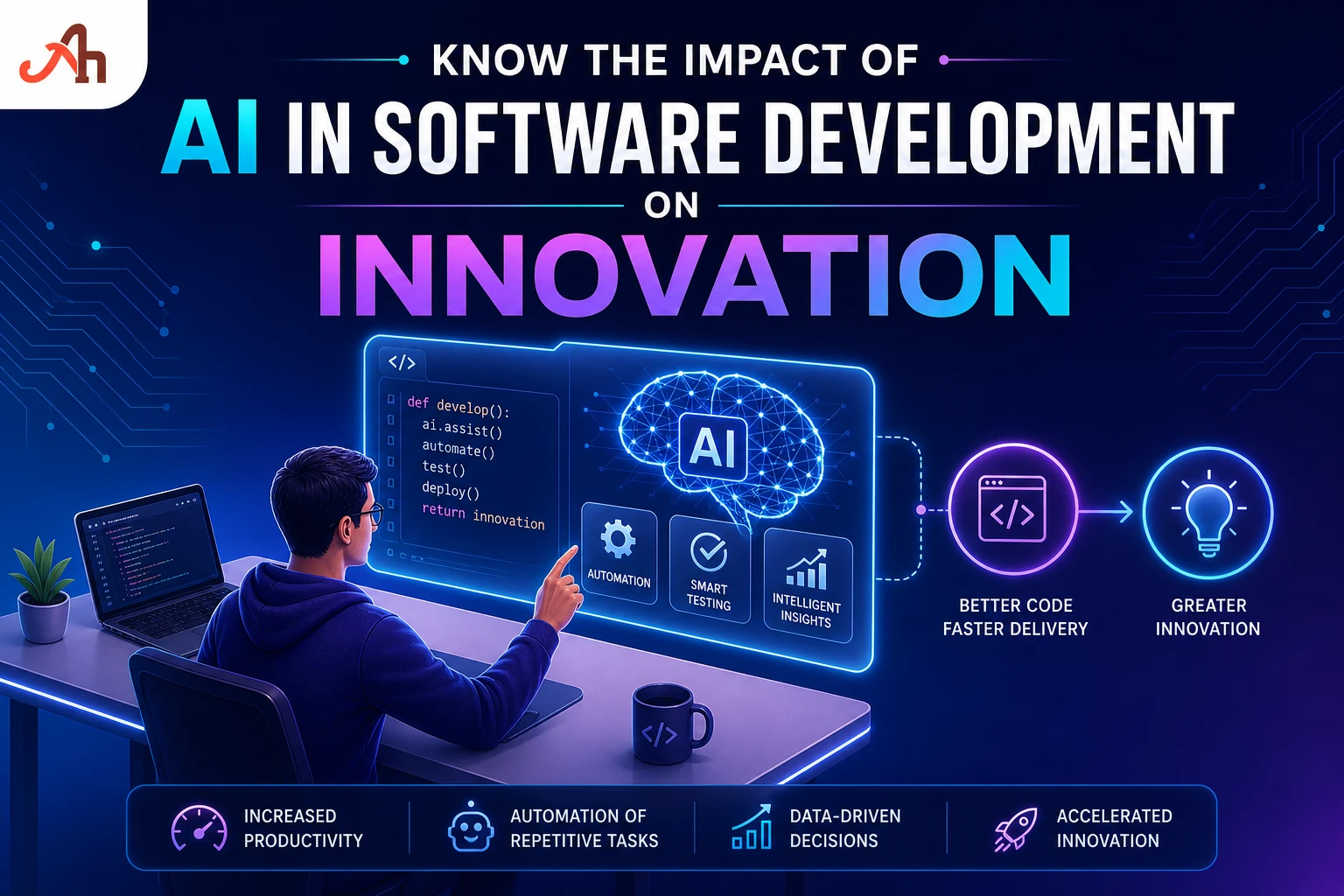
The rise of AI in software development is reshaping how developers write, test, and deploy code across industries. From automating repetitive tasks to predicting bugs before they occur, artificial intelligence innovation is transforming the tech landscape at an unprecedented speed. Students stepping into the world of programming and technology must understand these shifts to stay competitive and career-ready. Whether you need assignment help for your tech-related coursework or want to explore the future of coding, understanding AI's role is essential for every aspiring developer and IT professional today.
How AI Is Revolutionizing Software Development
The Shift Toward AI-Driven Development
Traditional software development relied entirely on human effort — writing every line of code, testing manually, and debugging for hours. Today, AI-driven development has introduced a smarter way to build software. AI algorithms now assist developers in generating code snippets, detecting errors in real time, and even suggesting architectural improvements.
This shift is not just about speed — it's about quality, accuracy, and scalability. Companies like GitHub, Google, and Microsoft are investing heavily in AI tools that empower developers to focus on creativity while machines handle the repetitive groundwork.
Smart Coding Tools Changing the Game
What Are Smart Coding Tools?
Smart coding tools are AI-powered assistants that integrate directly into development environments (IDEs) to offer real-time suggestions, auto-complete code, and detect vulnerabilities. Tools like GitHub Copilot, Tabnine, and Amazon CodeWhisperer are among the leading examples transforming how developers write code.
Key Benefits of Smart Coding Tools:
Faster code writing — Autocomplete suggestions reduce the time spent on boilerplate code
Error reduction — AI detects syntax and logical errors before compilation
Learning support — Great for students working on python assignment, programming assignment, and php assignment tasks
Cross-language support — Works across multiple programming languages simultaneously
Documentation generation — Auto-generates comments and documentation for better code readability
These tools are especially helpful for students managing a coding assignment or exploring a new programming language for the first time.
Machine Learning in Programming: A Deep Dive
How Machine Learning Enhances Code Quality
Machine learning in programming enables systems to learn from millions of existing codebases and apply that knowledge to assist developers. Unlike rule-based tools, ML models improve over time — getting smarter with every line of code they analyze.
Real-World Applications of ML in Programming:
Predictive debugging — ML models predict where bugs are likely to occur based on patterns
Code review automation — AI reviews pull requests and flags quality issues
Test case generation — Automatically generates unit tests for better software reliability
Performance optimization — Identifies bottlenecks in code execution
Natural language to code conversion — Converts plain English instructions into working code
For students pursuing degrees in computer science or software engineering, understanding these concepts is as important as completing a management assignment or submitting a marketing assignment on time.
Automation in Software Engineering
Eliminating Repetitive Tasks with AI
Automation in software engineering is one of the most celebrated impacts of AI. Tasks that once took days — like regression testing, deployment pipelines, and code integration — can now be completed in minutes.
Key Areas Where Automation Is Making an Impact:
Continuous Integration/Continuous Deployment (CI/CD) — AI automates build, test, and release pipelines
Infrastructure management — AI monitors servers and allocates resources intelligently
Security scanning — Automated vulnerability assessment protects applications from cyber threats
Data migration — AI automates complex data transfers between systems
API testing — Ensures all endpoints function correctly without manual intervention
This level of automation is also influencing adjacent fields. Professionals dealing with HR management, risk management, and accounting assignment tasks are beginning to use AI-powered platforms for data analysis and reporting — showing how AI's reach extends beyond just coding.
AI-Powered Applications Driving Business Innovation
From Concept to Market Faster Than Ever
AI-powered applications are helping businesses launch products faster and smarter. Startups and enterprises alike are leveraging AI to build recommendation engines, chatbots, predictive analytics platforms, and intelligent automation tools — all at reduced cost and time.
Industries Being Transformed:
Healthcare — AI apps assist in diagnosis and patient data management
Finance — Automated trading and fraud detection systems
E-commerce — Personalized shopping experiences using behavioral AI
Education — Adaptive learning platforms that cater to individual student needs
Retail — AI-driven supply chain and inventory management
Students working on dissertation help, thesis help, or coursework help projects related to business and technology will find that AI-powered app development is one of the hottest research areas today.
AI's Role in Enhancing Collaboration and Learning
Making Teams Smarter and Students More Efficient
AI is not just for senior developers — it's transforming how students and junior developers learn and collaborate. Platforms powered by AI are now offering personalized coding lessons, instant homework help, and smart feedback systems that adapt to each learner's pace.
For students struggling with:
Essay writing — AI writing assistants help structure arguments effectively
English assignment — Grammar and style checkers improve written communication
Research paper writing — AI tools suggest credible sources and help organize findings
Research proposal writing — AI assists in identifying gaps in existing literature and building strong proposals
The integration of AI into academic support tools means students have smarter resources available to them than ever before.
Challenges and Ethical Considerations in AI-Driven Development
What Students and Developers Must Know
While artificial intelligence innovation brings enormous benefits, it also presents challenges that the tech community must address responsibly:
Bias in AI models — AI trained on biased data can produce discriminatory outcomes
Job displacement concerns — Automation may reduce demand for certain entry-level roles
Intellectual property issues — AI-generated code raises questions about ownership
Security vulnerabilities — AI systems can be exploited if not properly secured
Over-reliance on AI — Developers must still understand the code AI generates
Understanding these ethical dimensions is crucial for students studying software development, especially those writing a research paper writing or research proposal writing project on AI ethics and its societal implications.
The Future of AI in Software Development
What Lies Ahead for the Next Generation of Developers
The future of AI in software development is bold and promising. Experts predict that within the next decade, AI will handle up to 80% of routine coding tasks, freeing developers to focus on innovation, creativity, and problem-solving.
Upcoming trends to watch include:
Autonomous AI agents that independently build and test entire modules
Low-code/no-code AI platforms making development accessible to non-programmers
AI-powered code security that monitors applications in real time
Voice-driven development where developers speak code into existence
AI-integrated DevOps for fully automated software delivery pipelines
For the next generation of tech professionals, adapting to these changes early — through education, practical projects, and leveraging assignment support resources — will define career success.
Conclusion
The impact of AI in software development on innovation is undeniable — it is accelerating how software is built, tested, and deployed while opening new possibilities for creativity and efficiency. Students who embrace AI-driven development tools today will be better positioned to lead the tech industry tomorrow. From smart coding assistants to powerful machine learning models, the future belongs to those who learn, adapt, and innovate. Stay curious, keep learning, and use every resource available — including academic support — to build the skills that matter most in an AI-first world.