
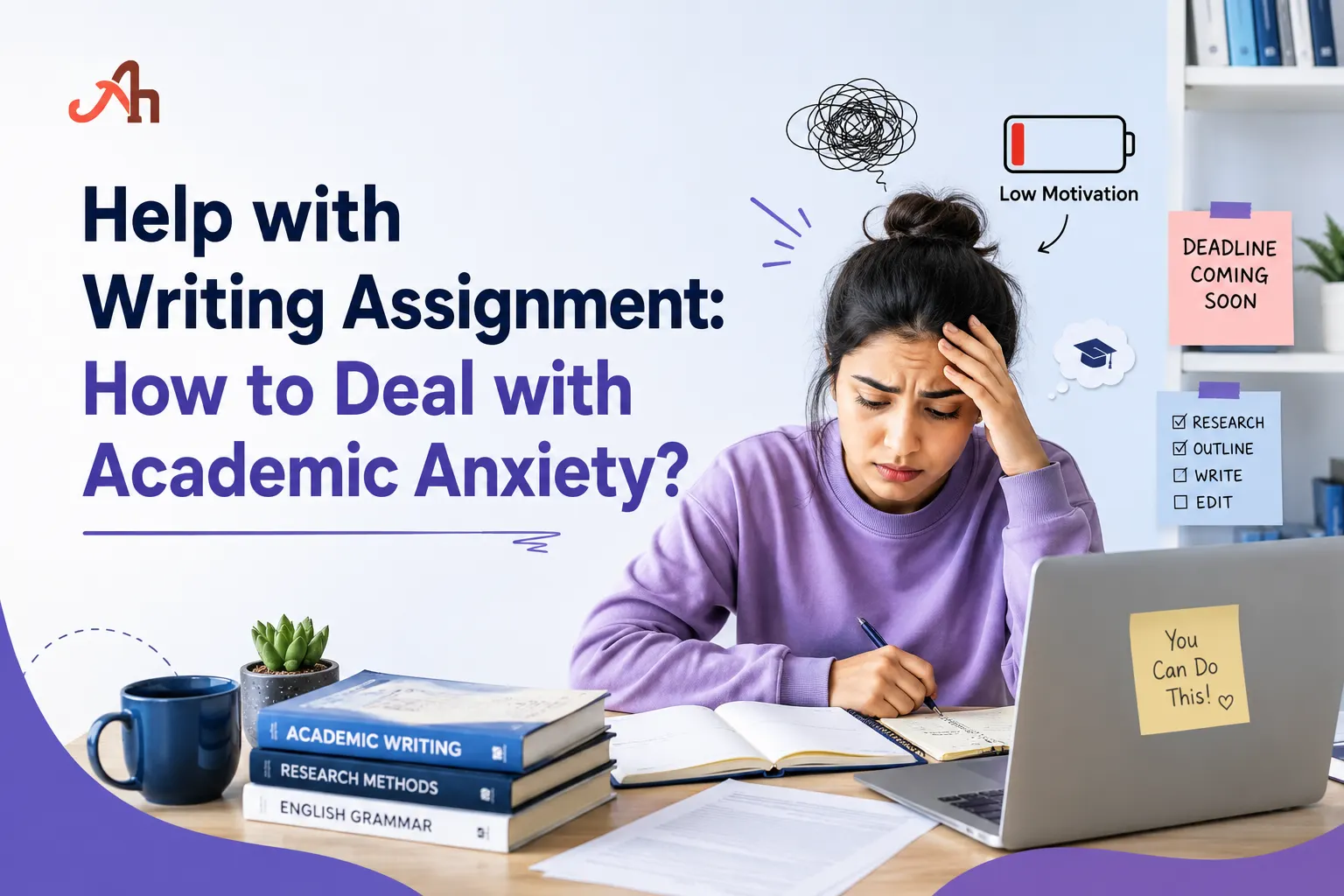
Every student, at some point, feels the heavy weight of academic anxiety — the sleepless nights, the racing thoughts before an exam, and the overwhelming pressure of back-to-back deadlines. Whether it's assignment stress, exam stress, or the constant battle with homework anxiety, you are not alone. Millions of students across the globe face the same struggles every semester. If you're looking for reliable assignment help to ease your academic burden while you work on your mental wellness, this guide is for you. Read on to discover practical, updated, and student-tested strategies to take control of your academic life.
What Is Academic Anxiety and Why Does It Happen?
Academic anxiety is more than just pre-exam nervousness. It is a persistent and often debilitating feeling of worry, fear, and self-doubt tied directly to academic performance, deadlines, grades, and peer comparisons. It affects student mental health at a deeper level than most educators acknowledge.
Common Triggers of Academic Anxiety
Understanding your triggers is the first step toward managing them. The most common causes include:
Unrealistic expectations from parents, professors, or yourself
Fear of failure and its consequences on career prospects
Procrastination cycles that leave assignments until the last minute
Comparison culture — constantly measuring yourself against classmates
Online learning stress from isolation, poor structure, and screen fatigue
Poor time management that creates a snowball of pending tasks
Financial pressure tied to maintaining scholarships or grades
How Academic Pressure Affects Student Mental Health
Academic pressure doesn't just affect your grades — it affects your brain, body, and relationships. When students experience chronic stress, the body releases cortisol continuously, which impairs memory, concentration, and decision-making — the exact skills needed to study effectively.
Signs You're Experiencing Academic Anxiety
Watch out for these red flags:
Difficulty sleeping the night before exams or submission deadlines
Constant self-doubt even when well-prepared
Physical symptoms like headaches, nausea, or rapid heartbeat
Avoiding study sessions due to overwhelming dread
Feeling mentally "frozen" when sitting down to write an essay or research paper
Irritability, mood swings, and withdrawing from social interactions
When Does Assignment Stress Become a Serious Problem?
Assignment stress becomes dangerous when it crosses from motivation into paralysis. If you find yourself unable to start tasks like a management assignment, a nursing assignment, or a complex dissertation, and the avoidance continues for weeks, it's time to take strategic action — both academically and emotionally.
Top Study Stress Solutions Every Student Must Know
Here are the most effective, research-backed study stress solutions that students have found genuinely helpful:
1. Break Tasks Into Micro-Goals
Large assignments feel impossible. A marketing assignment, economics assignment, or research paper writing task seems overwhelming when viewed as one giant block. Instead:
Break it into daily 30-minute focused sessions
Set micro-deadlines (outline by Tuesday, draft by Thursday)
Celebrate small wins — they rewire your brain for motivation
2. Master Time Management for Students
Time management for students is arguably the single most impactful skill you can develop. Poor scheduling is at the root of most homework anxiety.
Use the Time Blocking method: assign specific subjects to specific hours
Try the Pomodoro Technique: 25 minutes of work, 5-minute breaks
Prioritize tasks using the Eisenhower Matrix (urgent vs. important)
Plan your week every Sunday — include time for rest and recreation
Tools That Help With Student Time Management
Google Calendar — schedule assignments, exam dates, and study slots
Notion — organize notes, track deadlines, and create project boards
Forest App — gamifies focused study sessions to reduce phone distraction
Trello — great for managing long-term tasks like coursework help or thesis help
3. Address Online Learning Stress Directly
Since remote education became mainstream, online learning stress has emerged as a unique and underestimated challenge. Students report feeling isolated, unable to concentrate at home, and disconnected from the material.
Practical fixes:
Create a dedicated study space — even a specific corner of your room works
Dress as if you're going to class to trigger a "study mode" mindset
Join virtual study groups or Discord communities for your subject
Limit social media during study hours using app blockers like Cold Turkey
Exam Stress Management: Before, During, and After
Exam stress management is a three-phase process — most students only focus on "during" and ignore the rest.
Before the Exam
Start revision at least 2 weeks before — cramming destroys retention
Use active recall (testing yourself) instead of passive re-reading
Prepare a revision timetable that covers all subjects equally
Get 7–9 hours of sleep — your brain consolidates memory during sleep
During the Exam
Read all questions carefully before answering
Begin with questions you're confident about to build momentum
Manage time per question — don't spend 40 minutes on a 5-mark question
Practice slow, deep breathing if panic sets in
After the Exam
Avoid post-exam "paper discussions" that increase anxiety
Reward yourself with a non-academic activity
Reflect on what worked in your preparation — not what went wrong
Subject-Specific Help That Reduces Academic Anxiety
One of the most underrated study stress solutions is simply getting targeted help in your toughest subjects. Here's how professional academic support can alleviate pressure across different disciplines:
Assignment Help by Subject Area
Management assignment — strategic frameworks, case analysis, and leadership theories can be confusing; structured help makes concepts click faster
Corporate law assignment — legal terminology and case law require precision; guided writing reduces errors
Healthcare management assignment — blending health policy with management theory is complex and demands focused support
HR management assignment — topics like recruitment, labor law, and performance appraisal require real-world application
Risk management assignment — probability models and mitigation strategies benefit from step-by-step academic guidance
Behavior management assignment — psychological frameworks and classroom theory need clear, structured writing
Writing and Research Support
Research paper writing — learn how to form a thesis, analyze sources, and structure arguments logically
Research proposal writing — develop a compelling, ethical research plan that satisfies your university's requirements
Essay writing — master academic tone, argumentation, and citation styles (APA, MLA, Harvard)
Dissertation help — tackle chapter-by-chapter planning to eliminate dissertation-phase panic
Thesis help — structure your original research with clarity and academic rigor
Coursework help — manage multiple ongoing assessments without losing quality
Homework help — get unstuck quickly so small daily tasks don't pile up into a crisis
Case study writing — learn to apply theory to real-world scenarios with precision
Building Long-Term Mental Resilience as a Student
Managing student mental health isn't just about surviving exam season — it's about building lifelong habits.
Daily Habits That Protect Your Mental Health
Exercise for at least 20 minutes daily — even a walk reduces cortisol significantly
Journaling — writing down worries "unloads" them from working memory
Mindfulness and meditation — even 5 minutes a day using apps like Headspace reduces anxiety markers
Social connection — talk to a friend, classmate, or counselor regularly
Nutrition — avoid excessive caffeine; fuel your brain with protein and complex carbs
When to Seek Professional Help
If your academic anxiety is interfering with daily functioning — eating, sleeping, socializing — it's time to speak to your university's counseling center or a licensed therapist. Mental health is not a luxury; it is a prerequisite for academic success.
The Role of a Healthy Mindset in Academic Success
Shift From a Fixed Mindset to a Growth Mindset
Research by psychologist Carol Dweck shows that students who believe abilities can be developed (growth mindset) outperform those who believe intelligence is fixed. Practical shifts include:
Replace "I'm bad at economics" with "I haven't mastered this yet"
View a failed economics assignment as data, not identity
Celebrate effort over outcome — the process builds the skill
Quick Mindset Mantras for Anxious Students
"Progress, not perfection."
"One task at a time."
"Asking for help is a sign of strategy, not weakness."
"My grade does not define my worth."
Conclusion
Academic anxiety is real, valid, and incredibly common — but it doesn't have to control your student life. By combining smart time management for students, targeted exam stress management strategies, proper rest, and subject-specific academic support, you can transform stress into structured productivity. Whether you're struggling with homework anxiety, overwhelmed by online learning stress, or facing complex assignments across subjects like law, healthcare, or management — help is always available. Take small steps every day, be kind to yourself, and remember: your academic journey is a marathon, not a sprint. You have everything it takes to succeed.