
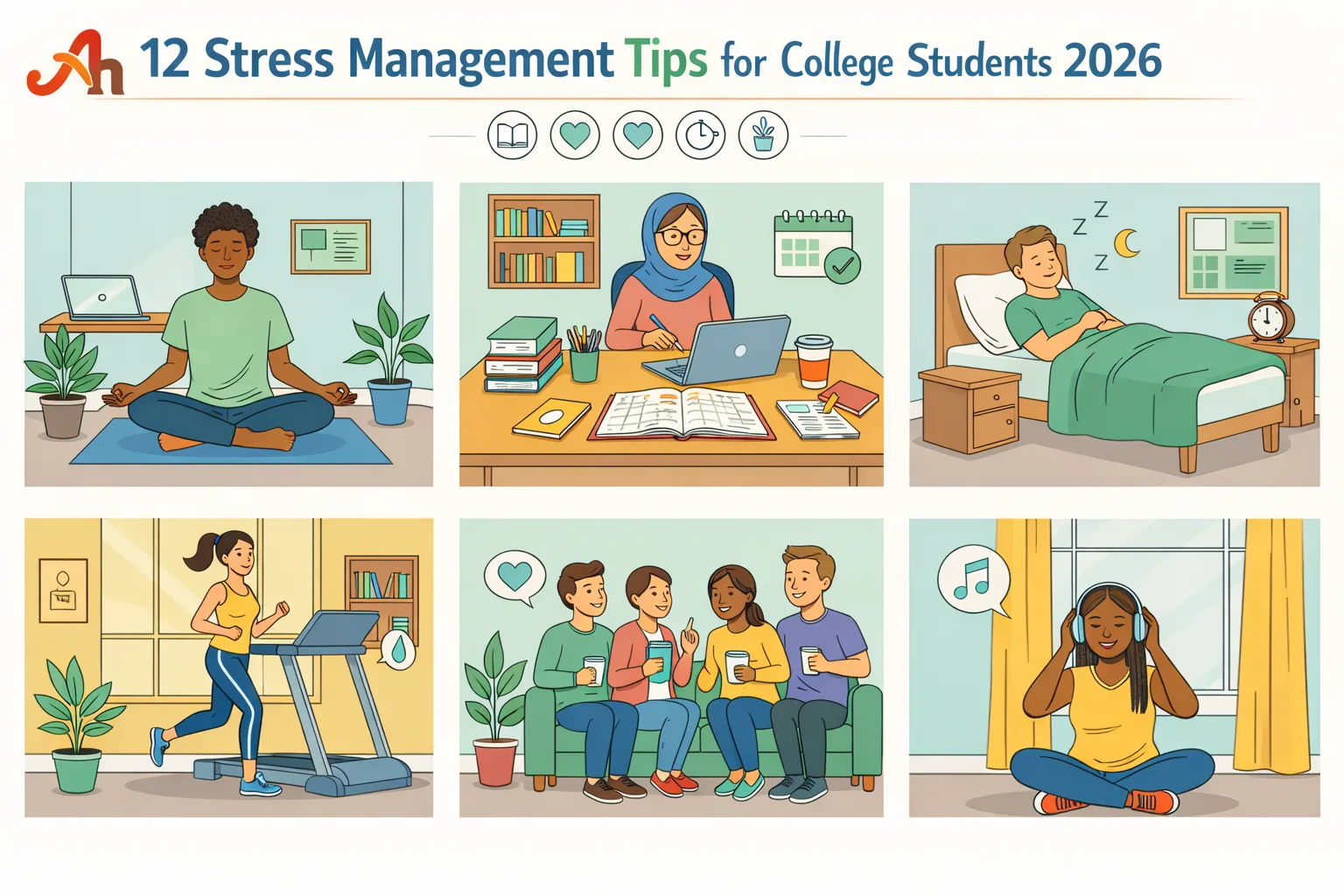
College life in 2026 is more demanding than ever, with academic pressure, social challenges, and financial worries hitting students all at once. If you're struggling to keep up, you're not alone — and the right stress management tips for students can make a real difference. Whether you need help with deadlines, exams, or just day-to-day overwhelm, this guide is built for you. And if academic workload is a major stressor, don't forget that professional assignment help is always available to lighten the load and keep you on track.
Why Is Stress So Common Among College Students?
Understanding stress management for college students begins with knowing why stress happens in the first place. College is a major life transition — new environment, new responsibilities, and high expectations all collide at once.
Common stress triggers for college students include:
• Heavy academic workload and back-to-back deadlines
• Fear of failing exams or scoring low grades
• Financial stress from tuition fees, rent, and living costs
• Social pressure and loneliness, especially for first-year students
• Uncertainty about future careers and job prospects
• Poor sleep habits and unhealthy lifestyle choices
12 Proven Stress Management Tips for College Students in 2026
1. Build a Realistic Daily Schedule
One of the most effective student stress relief techniques is time management. When your day is unplanned, anxiety creeps in. A structured schedule gives you control and reduces last-minute panic.
How to do it:
• Use apps like Notion, Google Calendar, or a physical planner
• Block time for studying, meals, exercise, and relaxation
• Include buffer time between tasks to avoid burnout
• Review and adjust your schedule every Sunday night
This approach is also used in fields like operations management and risk management, where planning ahead is the key to avoiding crises.
2. Practice Mindfulness and Meditation Daily
Mindfulness is one of the most recommended mental health tips for students. It trains your brain to stay present and reduces anxious thoughts about the future. Even 10 minutes a day can rewire how your mind handles pressure.
• Try guided meditation apps like Headspace or Calm
• Practice deep breathing: inhale for 4 counts, hold for 4, exhale for 6
• Do a morning mindfulness check-in before your first class
• Use body scan techniques to release physical tension
3. Master Smart Study Techniques to Beat Exam Stress
Exam stress is one of the biggest stressors students face. The good news? The right exam stress management tips can transform how you prepare, so exams feel manageable rather than terrifying.
Smart study strategies:
• Use the Pomodoro Technique: 25 minutes study, 5 minutes break
• Create summary sheets and mind maps instead of re-reading notes
• Practice past exam papers under timed conditions
• Study in groups to share ideas and keep each other accountable
• Avoid cramming — start at least 2 weeks before major exams
If assignments pile up during exam season, professional coursework help, essay writing, or homework help services can help you stay afloat without sacrificing your mental health.
4. Prioritize Quality Sleep Every Night
Sleep deprivation is a silent stress multiplier. When you're tired, your brain processes emotions poorly, memory suffers, and even small problems feel catastrophic. Quality sleep is a non-negotiable part of how students manage stress in college.
• Aim for 7–9 hours of sleep per night
• Set a consistent sleep and wake time — even on weekends
• Avoid screens at least 45 minutes before bed
• Create a calming bedtime routine: reading, stretching, or journaling
• Avoid caffeine after 3 PM
The Link Between Sleep and Academic Performance
Research consistently shows that well-rested students score higher on tests, retain information better, and report lower levels of anxiety. Think of sleep as your brain's recovery mode — skipping it is like running your laptop on 2% battery.
5. Move Your Body — Exercise is a Natural Stress Buster
Physical activity is one of the most powerful and underused student stress relief techniques. Exercise releases endorphins — your brain's natural mood boosters — and lowers cortisol (the stress hormone).
• Aim for 30 minutes of moderate exercise, 4–5 times per week
• Try campus gym sessions, yoga, swimming, or even brisk walking
• Join a college sports team or fitness class for community support
• Use exercise as a study break rather than screen time
• Even a 10-minute walk between lectures improves focus and mood
6. Eat Well to Think Well
Your diet directly impacts your mental clarity and emotional resilience. Skipping meals or surviving on junk food spikes blood sugar and worsens anxiety — something any student following mental health tips for students should know.
• Eat balanced meals with protein, healthy fats, and complex carbs
• Never skip breakfast — it sets your energy for the day
• Stay hydrated: aim for 8 glasses of water daily
• Reduce energy drinks and sugary snacks during exam periods
• Meal prep on weekends to save time and eat healthier during the week
7. Build a Strong Support Network
One of the most overlooked aspects of stress management for college students is human connection. Isolation worsens stress dramatically. Building meaningful relationships gives you emotional support and perspective.
• Stay connected with family — a quick call can ease homesickness instantly
• Make friends in your course or department
• Join student clubs, societies, or volunteering groups
• Talk openly with a trusted friend when things feel overwhelming
• Don't be afraid to ask your lecturer or advisor for help
8. Seek Professional Mental Health Support When Needed
There's absolutely no shame in asking for professional help. Most universities in 2026 offer free or subsidised counselling services. Exploring healthcare management resources on campus — including mental health clinics — is a smart and brave step.
• Contact your university's student wellbeing or counselling centre
• Try therapy apps like BetterHelp or Woebot for 24/7 support
• Ask your GP about anxiety or depression symptoms
• Attend mental health awareness workshops on campus
• Use anonymous helplines if you're not ready to speak face-to-face
Signs You May Need Professional Help
• Persistent sadness or hopelessness lasting more than two weeks
• Panic attacks or extreme anxiety that interferes with daily life
• Difficulty concentrating or making decisions
• Loss of interest in things you used to enjoy
9. Set Boundaries with Social Media and Technology
In 2026, digital overwhelm is real. Constant notifications, comparison culture, and doomscrolling add invisible layers of stress. Limiting screen time is one of the most underrated stress management tips for students today.
• Set app time limits using iPhone Screen Time or Android Digital Wellbeing
• Create phone-free zones: no screens at the dinner table or in bed
• Unfollow accounts that make you feel inferior or anxious
• Take a full social media detox at least one day per month
• Turn off non-essential notifications during study hours
10. Learn to Say No and Manage Your Commitments
Overcommitting is a fast track to burnout. Whether it's an extra project, a social event, or taking on someone else's responsibilities, learning to say no is a crucial life skill — and one that professionals in HR management and management roles swear by.
• Review your commitments honestly every week
• Practice saying: "I appreciate the offer, but I can't take that on right now"
• Prioritise obligations using the Eisenhower Matrix (urgent vs important)
• Delegate tasks when working in group projects
• Focus on quality over quantity in everything you do
11. Develop Creative Outlets and Hobbies
Creative activities are powerful student stress relief techniques because they engage a different part of the brain — giving your academic mind a genuine break. Whether it's painting, music, cooking, or writing, creative hobbies restore energy and perspective.
• Dedicate at least 2 hours per week to a hobby you love
• Try journaling: writing about your feelings reduces cortisol levels
• Explore creative writing, photography, or digital art
• Cook a new recipe each week — it's meditative and rewarding
• Music: playing an instrument or even curating playlists reduces anxiety
12. Get Academic Help — Don't Struggle Alone
Academic pressure is one of the top causes of student stress, and it's also one of the most solvable. Using expert support services for thesis help, dissertation help, essay writing, or homework help is a smart strategy — not a shortcut.
• Use academic writing centres and tutoring services on campus
• Reach out to professional services for dissertation or thesis support
• Form study groups to tackle difficult subjects together
• Communicate with your professors when you're struggling — they want to help
• Plan your assignments in advance to avoid last-minute panic
How to Build Your Personal Stress Management Plan
A personalised plan is the key to how students manage stress in college long-term. Here's a simple framework to get started:
Step 1 — Identify your top 3 stress triggers.
Step 2 — Choose 3–4 techniques from the tips above that suit your lifestyle.
Step 3 — Schedule these activities into your weekly calendar.
Step 4 — Review your stress levels every two weeks and adjust as needed.
Step 5 — Seek support — from friends, tutors, or professionals — whenever you need it.
What Different Disciplines Teach Us About Managing Stress
Interestingly, the principles of stress management extend beyond personal wellness into professional fields. In marketing, for example, managing campaign pressure requires creative resilience. Operations management professionals use systematic planning — very similar to how students can schedule study blocks to reduce anxiety. Even risk management in business mirrors how students should identify academic risks early and address them proactively.
The lesson? The skills you build managing stress as a student — planning, communication, prioritisation, resilience — are the very skills that make great professionals.
Conclusion
College stress in 2026 is something every student faces, but it doesn't have to control your life. By applying even a few of these stress management tips for students — like building a schedule, practising mindfulness, sleeping well, and staying active — you can shift from surviving to thriving.
Remember, asking for help is a strength, not a weakness. Whether you lean on campus counselling, trusted friends, or professional services for coursework help, dissertation help, or essay writing — the right support always makes a difference.
You don't have to do it all alone. Start with one tip today, stay consistent, and give yourself the grace to grow through the process.