
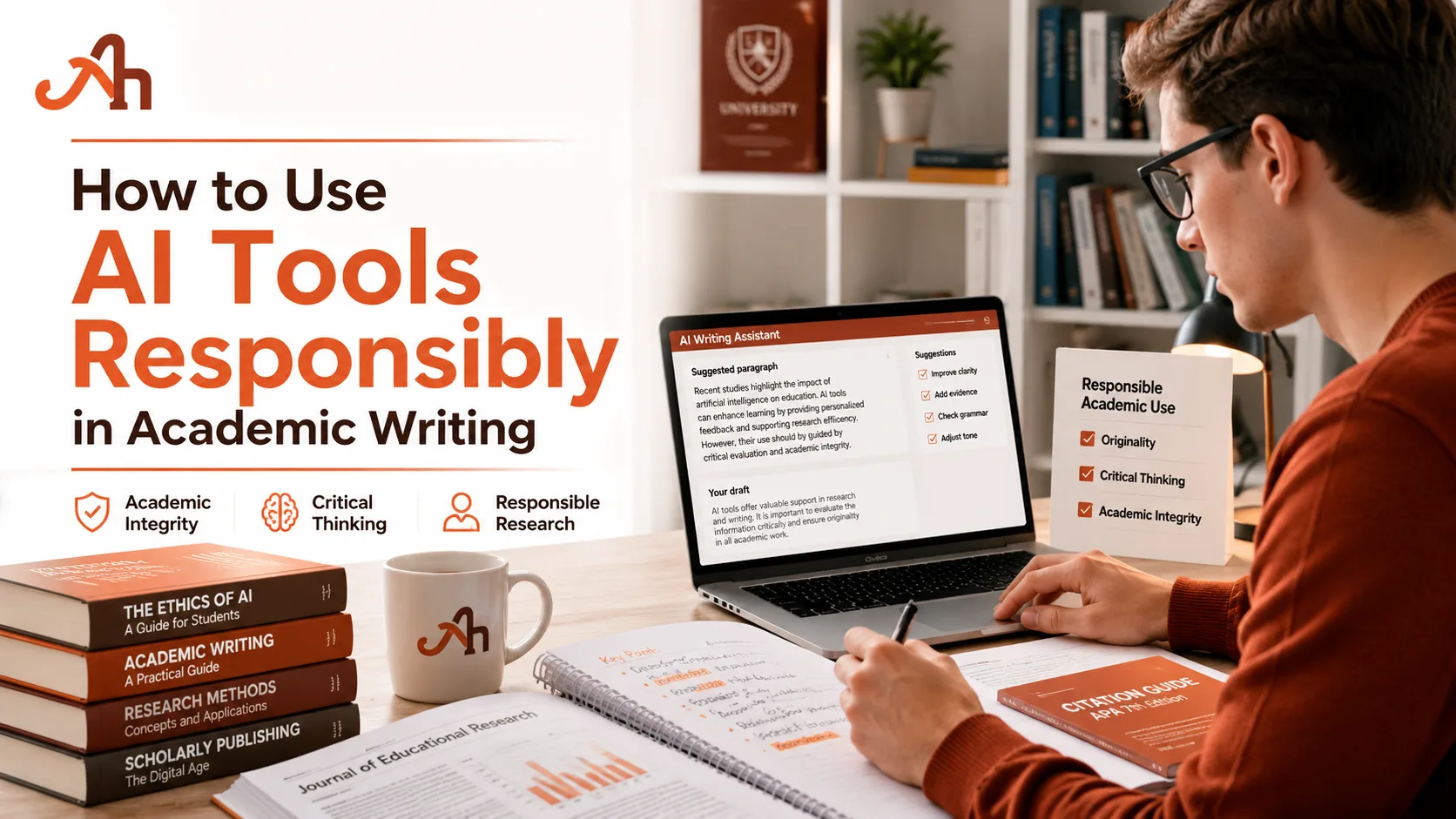
AI writing tools like ChatGPT, Grammarly, and QuillBot are now part of almost every student's routine, but using them the wrong way can put your grades and academic integrity at risk. Universities in 2026 increasingly allow AI as a support tool, not a replacement for your own thinking. This guide explains exactly how to use AI tools responsibly in academic writing so your work stays original, well-referenced, and fully your own. If you ever need extra support, professional assignment help from subject experts is also available.
What Does Responsible AI Use Mean in Academic Writing?
Responsible AI use in academic writing means using tools like ChatGPT or Grammarly only for support tasks such as brainstorming, grammar correction, and structuring ideas, while keeping the research, arguments, and final analysis entirely your own. Most universities in 2026 treat generative AI the way they once treated calculators or spell-checkers: acceptable as an assistive tool, unacceptable as a replacement for original thought.
Why Academic Integrity Still Matters in the AI Era
Academic integrity protects the value of your degree. Submitting AI-generated content as your own original work is treated as a form of plagiarism by most institutions, even when the text passes basic plagiarism checkers, because AI-detection software is now standard in grading workflows. Professors want to see your critical thinking, not a machine's paraphrase of an internet source.
- Protects the credibility of your grades and transcripts
- Builds the actual research and writing skills you'll need later
- Keeps you compliant with your university's AI usage policy
- Avoids penalties tied to academic misconduct or AI-plagiarism cases
How to Use AI Tools the Right Way (Step-by-Step)
Follow this sequence so AI supports your writing process instead of replacing it.
1. Use AI for Brainstorming and Outlining Only
Ask AI tools to suggest topic angles, generate a rough outline, or list possible arguments. Then research, verify, and write the actual content yourself. This keeps the intellectual work — the part professors grade — genuinely yours.
2. Use AI for Grammar and Clarity, Not Content Creation
Tools such as Grammarly and QuillBot are best used after you've written your first draft, to fix grammar, tighten sentences, and improve readability. Avoid asking AI to generate full paragraphs and submitting them unedited.
3. Always Fact-Check AI-Generated Information
Generative AI models are known to fabricate citations, statistics, and even entire sources — a problem researchers call "hallucination." Cross-check every fact, date, and reference against a credible academic source before including it in your paper.
4. Disclose AI Usage When Your Institution Requires It
Many universities, including Harvard and Walden University, now require students to disclose which AI tools they used and how. Add a short methodology note if your course guidelines ask for it — transparency is part of responsible use.
5. Run a Plagiarism and Referencing Check Before Submission
Before you submit, verify originality and formatting. A professional plagiarism check combined with a referencing help review in APA, MLA, or Harvard style ensures your paper is both original and properly cited.
Best Practices Students Should Follow
- Write your first draft yourself, then use AI only to refine it
- Never copy-paste AI output directly into a submission
- Keep a record of your prompts if disclosure is required
- Use AI-detection-aware editing so your own voice stays dominant
- Verify every citation manually using trusted referencing guides (APA, MLA, Harvard, Chicago)
- Ask your professor directly if a course-specific AI policy isn't clear
What Professors and Universities Expect From You
Most institutions expect AI to function like a study aid, not a ghostwriter. Professors are trained to spot generic phrasing, inconsistent argument depth, and missing citations that typically signal unedited AI content, so relying on AI without adding your own analysis and referencing is a common way students lose marks. To understand exactly what markers look for, read our related guide on what professors look for when grading assignments.
Common University AI Policy Themes in 2026
- AI allowed for research support, editing, and idea generation
- Mandatory disclosure of AI tools used in coursework
- Zero tolerance for AI-generated content submitted as original work
- Course-specific rules that can vary by subject and professor
Common Mistakes Students Make With AI Tools
- Submitting AI-written paragraphs without editing or verification
- Trusting AI-generated references without checking they actually exist
- Ignoring the university's specific AI and academic integrity policy
- Using AI to complete entire assignments, including analysis sections
- Failing to disclose AI use when the course explicitly requires it
How Need Assignment Help Supports Ethical Academic Writing
If you want expert support without compromising academic integrity, professional academic services can help you strengthen your own work rather than replace it. This includes essay writing guidance for structuring arguments, proofreading help for polishing final drafts, coursework help for ongoing assignments, and dissertation help for longer research projects — all built around originality, proper referencing, and academic honesty.
Conclusion
Using AI tools responsibly in academic writing comes down to one principle: let AI support your thinking, never replace it. Draft your own ideas first, use AI for editing and organization, verify every fact and citation, and disclose your usage when required. This approach protects your grades, builds real skills, and keeps your academic integrity intact in 2026 and beyond. When you need extra guidance, expert academic support is always a responsible option to consider.
Frequently Asked Questions
Q. Is it okay to use ChatGPT for academic writing in 2026?
Yes, for brainstorming, outlining, or grammar checks, but not for generating final content you submit as your own original work.
Q. Can professors detect AI-generated content in assignments?
Yes, most universities use AI-detection software alongside human review, so unedited AI text is often flagged during grading.
Q. Do I need to disclose AI tool usage in my assignments?
Many institutions now require disclosure. Always check your course guidelines and add a short note if it's mandatory.
Q. Does using Grammarly count as academic misconduct?
No, grammar and clarity tools are generally accepted since they polish your own writing rather than generating new content.
Q. How can I make sure my AI-assisted paper is still original?
Write your own draft first, verify AI facts and citations, then run a plagiarism check before submitting your assignment.